.svg "Group 12 (3)")
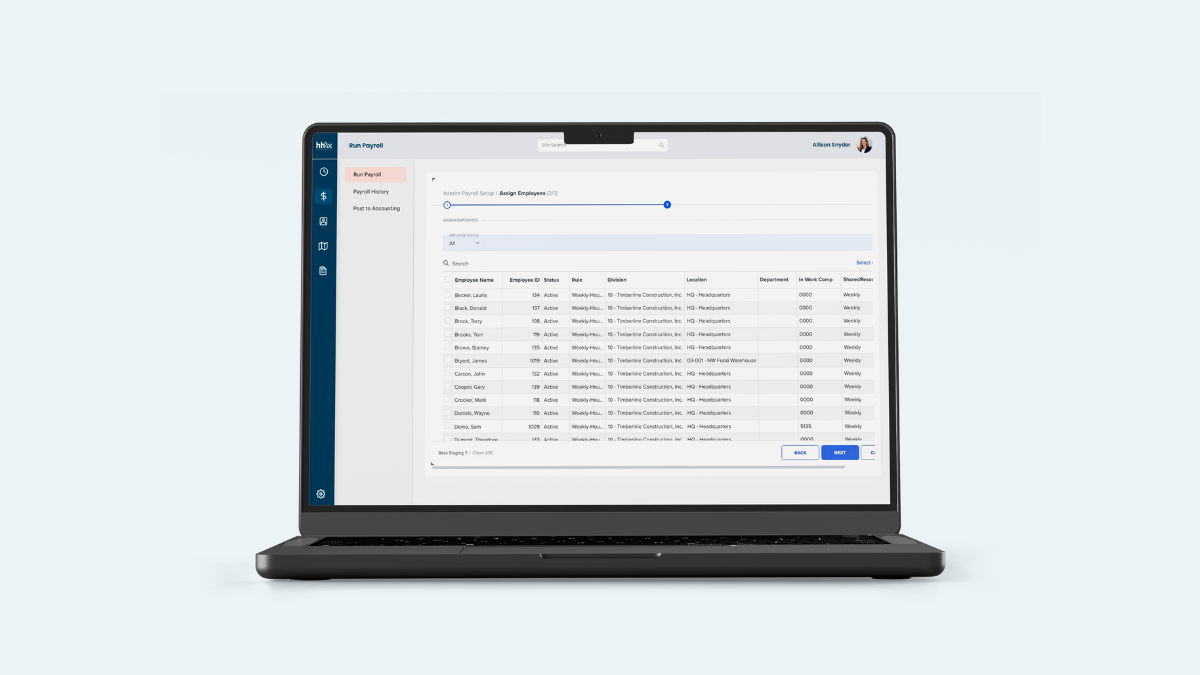

Certified payroll remains one of the most risk-sensitive compliance requirements in construction. For contractors working on federally funded or state-funded public projects, reporting errors can result in withheld payments, penalties, or audit findings.
In 2026, enforcement continues across both federal and state jurisdictions. While most construction teams understand certified payroll is required, fewer examine whether their payroll systems are structured to support it accurately and consistently.
Certified payroll compliance isn’t just a reporting obligation. It’s a test of how well labor data moves from the field through payroll and into the accounting system.
This guide outlines current certified payroll construction requirements and what your payroll system must support to reduce compliance risk.
What Certified Payroll Requires in Construction
Certified payroll refers to the weekly submission of payroll records confirming that workers on public projects were paid in accordance with prevailing wage laws.
Under the federal Davis-Bacon Act, contractors and subcontractors working on federally funded projects must:
- Pay prevailing wage rates determined by the Department of Labor
- Track worker classifications accurately
- Report wages and fringe benefits weekly
- Submit a signed Statement of Compliance
Certified payroll isn’t a separate payroll run. It’s a reporting and verification requirement layered onto standard payroll operations.
Accuracy in time tracking, classification, and wage calculations directly affects certified payroll compliance.
Federal Reporting Requirements
For federally funded projects, contractors must submit Form WH-347 or an approved equivalent each week.
Key reporting components include:
- Employee name and identifying number
- Work classification
- Hours worked by project and classification
- Rate of pay
- Gross wages earned
- Deductions
- Net wages paid
- Fringe benefits paid or credited
Each submission must include a signed Statement of Compliance certifying that wages meet federal requirements.
Common compliance errors include misclassifying workers, applying incorrect wage determinations, miscalculating fringe benefits, inconsistent overtime handling, and late submissions. These errors often originate upstream in time capture and payroll configuration.
State and Local Variations
Many states operate their own prevailing wage programs in addition to federal requirements. In some cases, state rules apply even when federal funding isn’t involved.
Variations may include:
- Different wage determinations
- Separate reporting portals
- Electronic filing mandates
- Distinct fringe calculation rules
- Apprentice documentation requirements
- Local tax reporting considerations
For contractors operating across jurisdictions, managing multiple certified payroll standards increases complexity. Consistency in job coding, worker classification, and fringe tracking becomes critical when reporting requirements differ by location.
Where Certified Payroll Compliance Breaks Down
Certified payroll failures rarely originate in the reporting form itself. They typically stem from labor data issues earlier in the workflow.
Common breakdown points include:
- Multi-rate workers across different jobs
- Union and non-union wage tables applied inconsistently
- Fringe benefits split incorrectly between cash and benefits
- Apprentices not tracked under proper ratios
- Manual spreadsheet adjustments
- Disconnected time tracking and payroll systems
When payroll teams must adjust time or wage data before generating certified reports, compliance exposure increases.
Certified payroll exposes system weaknesses quickly. When classifications, fringe rules, and job coding require manual correction before reporting, the issue isn’t the form. It’s the payroll infrastructure behind it.
What Your Payroll System Must Support
To meet 2026 certified payroll construction requirements, payroll systems need to do more than process checks. They have to structure and protect labor data throughout the workflow.
Construction payroll systems should provide:
- Built-in prevailing wage tables
- Automated fringe calculations
- Multi-rate labor handling
- Certified payroll report generation
- Overtime rule automation
- Alignment with job cost structures
- Direct posting to the accounting system
If any of these functions require manual workarounds or external spreadsheets, the risk of miscalculation and audit exposure increases.
Integration quality also matters, especially when payroll must align directly with your Sage accounting system. When time tracking, payroll calculation, and accounting system posting operate within disconnected platforms, reconciliation becomes routine. Each additional adjustment creates risk and slows financial reporting.
Construction payroll software designed for prevailing wage environments reduces manual adjustments and lowers compliance risk.
Recordkeeping and Audit Readiness
Certified payroll compliance extends beyond weekly submissions. Contractors must maintain supporting documentation in the event of an audit.
Required documentation typically includes:
- Timecards or electronic time records
- Classification records
- Wage determinations used
- Fringe benefit calculations
- Apprenticeship agreements
- Proof of benefit payments
Federal regulations generally require payroll records to be retained for at least three years after project completion. State requirements may vary.
Digital recordkeeping improves audit readiness by aligning payroll calculations, certified reporting, and job cost data within the same structured system.
Preparing for Certified Payroll Compliance in 2026
Certified payroll requirements aren’t becoming simpler. Enforcement continues, digital reporting is expanding, and scrutiny around fringe calculations remains high.
For construction contractors, certified payroll compliance ultimately reflects payroll system design. When classifications, wage tables, fringe rules, and job coding are aligned before payroll runs, certified reporting becomes a structured output rather than a manual correction exercise.
If certified payroll reporting requires ongoing spreadsheet adjustments, reconciliation before submission, or repeated corrections during close, Schedule a demo to see how hh2's payroll platform is built for construction compliance.
Strengthen Certified Payroll & Payroll Accuracy
Reduce manual corrections, automate prevailing wage calculations, and align payroll directly with your accounting system using hh2’s construction payroll solutions.
Blog Transcript