
Most construction companies rely on several systems to run their business. Field teams track time in one system, payroll is processed in another, and accounting teams manage financial reporting in their accounting software.
When these systems don’t connect, teams often spend hours manually moving the same information between them.
Payroll is one of the biggest pieces of this workflow. Labor is often the largest cost on a construction project, and payroll data feeds directly into job costing and financial reporting. If payroll data doesn’t flow into the company’s accounting system, it becomes harder to track project costs accurately.
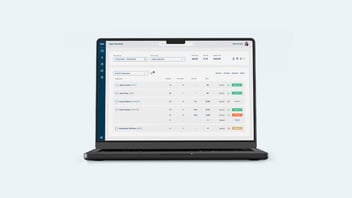
A payroll integration connects payroll data with the accounting system so information moves automatically between platforms. Instead of re-entering hours and wages in multiple places, contractors can keep payroll, job costing, and financial reporting aligned.
For construction companies, this means fewer errors, less manual work, and better visibility into project performance.
Why Payroll Integration Matters for Construction Companies
Payroll touches nearly every part of a construction business. Employee hours affect project budgets, job costing, and financial reporting.
But when payroll systems operate separately from accounting software, teams often have to enter the same data in multiple places.
Common problems include:
• Payroll hours entered in both payroll and accounting systems
• Delays updating labor costs in job cost reports
• Payroll and accounting numbers that don’t match
• Extra time spent reconciling labor costs
A payroll integration removes these manual steps. Once payroll is processed, labor costs can automatically update in the accounting system.
Instead of reconciling multiple systems, construction teams can rely on one consistent view of labor costs.
How Payroll Data Impacts Job Costing
In construction accounting, payroll data directly affects job costing.
Every employee hour must be tied to the correct:
• project
• cost code
• phase of work
Without integration, accounting teams often need to manually enter labor costs into the accounting system after payroll runs. This slows down reporting and increases the chance of mistakes.
When payroll integrates with accounting software, labor costs can automatically flow into job costing records. This allows construction companies to:
• Track labor costs more accurately
• Update job cost reports faster
• Reduce time spent reconciling payroll data
• Understand project profitability sooner
For contractors managing multiple projects at once, accurate labor cost data makes a big difference in how quickly they can respond to project issues.
Key Features of a Construction Payroll Integration
A payroll software integration connects payroll with accounting systems so information flows automatically between them.
Most construction payroll integrations provide several key capabilities.
Automatic payroll data sync
Approved employee hours can flow directly from time tracking into payroll and accounting systems.
Job costing alignment
Labor hours and wages can automatically map to the correct project, phase, and cost code.
Reduced manual data entry
Payroll teams no longer need to transfer hours between systems.
Improved payroll accuracy
Automation helps reduce errors caused by manual entry.
Better financial reporting
Accounting teams can generate more accurate job cost and financial reports because payroll data updates automatically.
Together, these features help construction companies simplify payroll while keeping financial data accurate.
How Payroll Integrations Work with Accounting Systems Like Sage Intacct and Sage 300
Most construction companies rely on accounting platforms to manage financial reporting and job costing. Systems like Sage Intacct and Sage 300 are commonly used to track project costs and maintain financial records.
Payroll integrations connect payroll and time tracking systems with these accounting platforms.
When payroll runs, employee hours, wages, and labor costs can automatically sync with the accounting system. Labor costs can then be assigned to the correct project and cost code without manual entry.
This makes it easier for accounting teams to maintain accurate job costing while reducing the time spent managing payroll data.
Many contractors use payroll integrations to connect payroll workflows with accounting systems like Sage Intacct so payroll data flows directly into financial reporting.
Signs Your Payroll System May Need Integration
Some construction companies operate payroll and accounting systems separately for years without realizing how much time is spent managing disconnected processes.
A few signs your payroll system may need integration include:
• Payroll hours must be entered in multiple systems
• Job cost reports take days to update after payroll
• Accounting teams spend time reconciling labor costs
• Payroll errors occur when transferring data manually
• Tracking labor costs across projects feels complicated
If these challenges sound familiar, a payroll integration may help simplify payroll operations and improve financial reporting accuracy.
See How Payroll Integration Works
For construction companies, connecting payroll with accounting systems can reduce administrative work and improve job cost visibility.
hh2 helps contractors connect payroll, time tracking, and accounting systems so payroll data flows automatically into financial reporting and job costing.
Schedule a demo to see how hh2 payroll integrations work with construction accounting systems.
Connect Your Payroll & Accounting System
Reduce manual work and payroll errors by connecting payroll, time tracking, and accounting with hh2’s construction software.
Blog Transcript